By A.J. Kaufman, Managing Editor
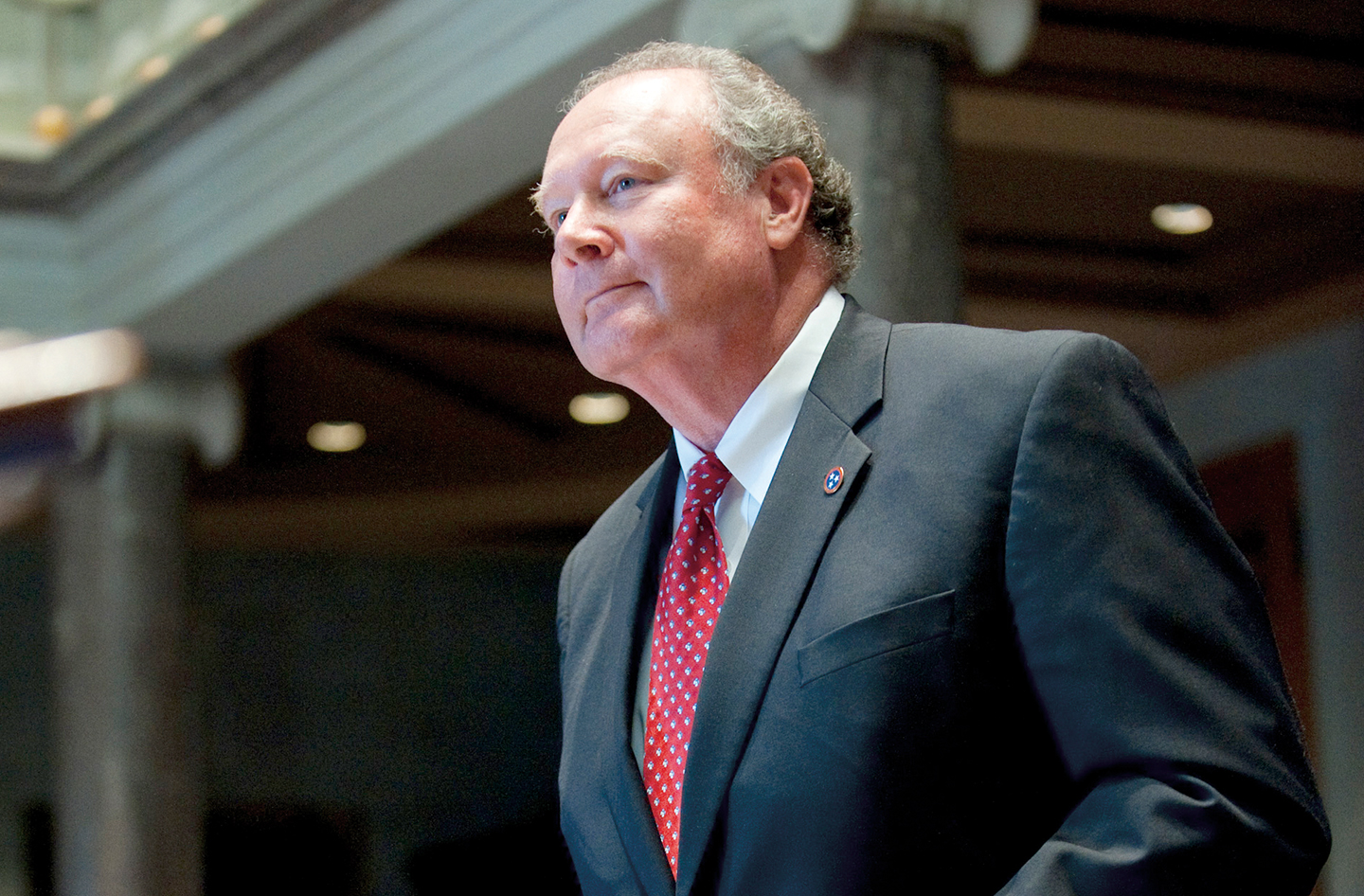
Business Journal: Tell me about your military service. Why did you want to join the military? Was there any specific motivation? What years were you in active duty, where did you serve, and what roles did you hold?
Rusty Crowe: I was halfway through college when I felt the need to volunteer for the U.S. Army. My dad had served as a B-24 bomber pilot, flying 31 missions and fought on D-Day as well. My uncle, Dewey Crowe — the man I am named after — his older brother, was killed fighting the Japanese, flying a P-38 Lightning, the fastest plane of its time.
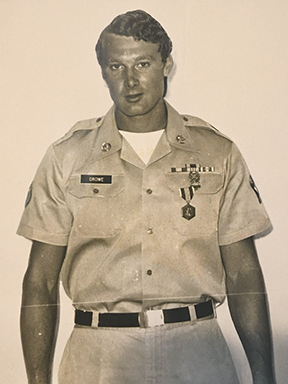
So, I volunteered and got on the bus in Johnson City in 1967 and headed to Fort Jackson, South Carolina. For basic training, having scored well on testing, I was placed in the Army Security Agency, a form of military intelligence akin to the National Security Agency. I trained for 25 weeks at Fort Devens, Massachusetts, sending and receiving codes.
My first stop was Okinawa, where I spent the days using a stadium size antenna intercepting coded messages from enemy guerrilla groups and the Chinese military. Then I was sent to Vietnam and Thailand, where I spent the next two years intercepting messages from Viet Cong, Laotian and other enemy groups to keep track of their activities. We could also triangulate on downed pilots to locate and hopefully quickly go in and make sure they got to safety.
I came home in 1971, finished college at ETSU on the G.I. Bill, and then went to law school, also on the G.I. Bill.
BJ: What did you learn from your service to the country?
RC: My military service was certainly what I needed to ground me and give me the confidence that I needed to know that moving forward in life, and that I could accomplish anything that I set out to do. I guess you feel that if you can make it through this, you can make it through anything.
BJ: What does Veterans Day overall mean to you?
RC: The late Congressman Jimmy Quillen, who helped me in those early political years, used to say, “our veterans cared more for our liberty and freedom than they did even their own lives.”
BJ: Do you do anything special on 11/11, like attend a parade, have a special meal, visit a cemetery or contact fellow soldiers?
RC: On Veterans Day, I attend ceremonies and visit the cemeteries where my father and uncle rest, as well as those beautiful memorials where all our veterans are remembered. I am also proud to serve on the governor’s council on service members, veterans and their families.
BJ: And lastly, did being a veteran at all influence you to get into public service/politics, and if so, how?
RC: I think veterans understand the importance of public service, because our own service taught us the value of order, teamwork, work ethic and civic responsibility, which extends to the communities that we settled into after our service ended. We also share a deep sense of patriotism, which makes us want to be very active participants in strengthening our communities and our democratic republic. I am so thankful that I chose to volunteer for service in the U.S. Army. And I often wonder what path in life I would have taken otherwise.