By A.J. Kaufman, Managing Editor
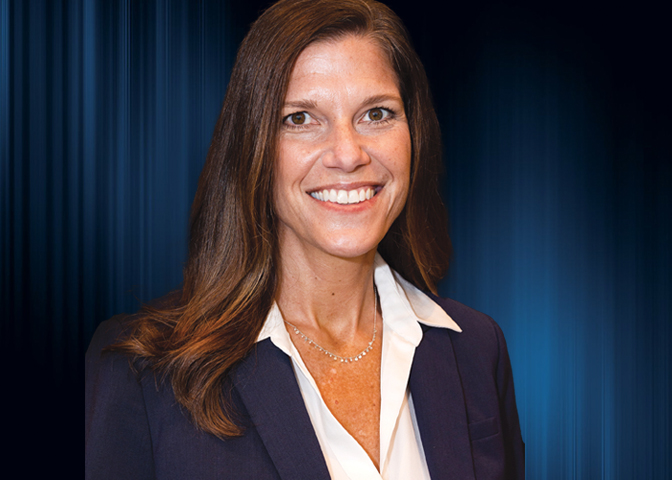
Kristie Hammonds has been president and CEO of Frontier Health since 2019. Based in the Tri-Cities and in operation for more than 65 years, they are the region’s leading provider of behavioral health services, offering 65 facilities in 12 counties and the City of Norton across Northeast Tennessee and Southwest Virginia. The Business Journal sat down with Hammonds in August for a wide-ranging discussion about her career and the organization she leads.
Business Journal: What led to your original decision to pursue a career in behavioral health care?
Kristie Hammonds: I’ve always had a passion for helping others, even from a young age, though I didn’t fully understand what that could look like as a career until the second semester of my undergraduate studies. I took one of my first social work classes, and it just felt right. Everything clicked. After earning my BSW, I started my first job working the graveyard shift at Link House, an adolescent residential program with Frontier. It was a tough environment but incredibly rewarding. Working with those teenagers taught me a lot about resilience, growth, and the real impact we can have.
One of the most powerful moments came years later when I ran into someone I had worked with, now thriving in the community. That’s when I truly realized: this work can be life-changing—not just for the people we serve, but for us as professionals too. There’s nothing like seeing someone succeed and knowing you were a small part of that journey.
BJ: Why did you want to work with Frontier Health, and was being president/CEO an original goal of yours?
KH: I’ve always had a passion for helping others. While my career journey did lead me away from Frontier for a time, I never lost respect for the organization. Frontier has always stood out to me for its integrity, resilience and unwavering focus on both quality of care and creating a strong internal culture. Coming back to Frontier truly felt like coming home; it was an easy decision.
Becoming president and CEO was never something I set out to do from the start. I don’t think I could have imagined it early on. But I believe that at different points in life, you’re presented with opportunities — doors open, others close — and those moments shape your path. I was, and still am, incredibly humbled and honored that the Board had the confidence in me to lead such an amazing organization.
BJ: Speaking of original goals, once you began in that leadership role, what were some priorities and, since then, accomplishments worth noting?
KH: Great question! The first year was focused primarily on learning, listening and understanding the organization’s needs from both an internal and external perspective. Not long after, we were faced with the COVID-19 pandemic, which naturally shifted us into a period of crisis management. That experience reinforced the importance of staying flexible, grounded and people focused.
From the beginning, my personal leadership goal was to lead with grace—to listen, support, and respond
effectively to the evolving needs of both our teams and the communities we serve.
Organizationally, we set strategic goals to prioritize training, reinforce quality standards, and strengthen our internal culture. One of our key initiatives was building on our Pillars of Caring framework, especially our People Pillar, which focuses on both our team members and those we serve. We made a significant push to improve staff retention and reduce turnover, launching a leadership development program in partnership with Huron to help grow and support our current and future leaders.
Through our Certified Community Behavioral Health Clinic grant, we implemented multiple evidence-based training programs. These not only help combat burnout but also ensure our teams are equipped with the right tools to serve clients effectively and compassionately.
From a facilities standpoint, we’ve seen some exciting growth. We completed a beautiful new building in Bristol, consolidating services under one roof to better meet community needs. And we’re thrilled about our upcoming Kingsport facility, opening in the fall, which will include a Children’s Crisis Walk-In Center and an Adolescent Intensive Outpatient Program—both created in direct response to feedback from the community. We’re grateful to the Department of Mental Health and Substance Abuse Services for infrastructure funding that made this possible.
Seeing the impact of this work, both big and small, continues to be one of the most rewarding parts of my role.
BJ: What advice do you give to women considering starting their careers in the corporate world — either here in Appalachia or elsewhere?
KH: Honestly, my advice applies to anyone starting a career in leadership or the corporate world—not just women.
First and foremost: Stay true to who you are. Someone once told me, “Don’t change for anyone but you,” and that has stuck with me ever since. It’s easy to get caught up in comparison, social pressure or self-doubt, especially early in your career. But remember, each of us was made uniquely for a reason, and the world would be pretty boring if we were all the same. Your authenticity is your strength.
I’ve also learned a few key lessons along the way that I often share:
- Never let emotion control your reaction. If you do, you’ve already given up your power. Take a breath, pause and respond with intention—not impulse.
- Listen. Truly, this may be the most valuable skill I’ve learned. You gain so much when you simply stay quiet
and take in what others are saying. Listening is where growth and understanding begin. - Ask questions and seek guidance. Don’t be afraid to admit when you don’t know something. Surround yourself with people you trust—people with expertise—and then genuinely listen to their input. Leadership isn’t about knowing everything; it’s about knowing how to leverage the strengths of those around you.
Whether you’re beginning your career here or anywhere else, these principles can help build a strong, grounded foundation and keep you centered as you grow into your role.
BJ: How has the new building on Volunteer Parkway helped Frontier, and what is next on the horizon?
KH: The new facility has been a true game-changer for Frontier. It gave us the opportunity to reimagine how we deliver care in the community by bringing all of our services together under one roof. That consolidation has helped reduce barriers, improve access and create a more welcoming, integrated space for those we serve. We were incredibly fortunate to be able to invest in such a beautiful facility that reflects the dignity of the work being done inside it.
Looking ahead, there’s a lot we’re excited about. As I mentioned earlier, we’ll be opening a new facility in Kingsport in early Fall 2025. This space will expand our continuum of care, including a Children’s Crisis Walk-In Center and an Adolescent Intensive Outpatient Program—both developed in response to needs shared by the community. We’re grateful to the Department of Mental Health and Substance Abuse Services for infrastructure funding that has made this possible.
We also recently opened a new program in Johnson City: Virginia’s Place, a male re-entry housing program.
This initiative is designed for individuals with severe mental illness who have experienced challenges staying out of the justice system. It offers long-term housing in a safe, structured, and supervised environment, alongside supportive services to help residents stay on track in their recovery journeys. We’re hopeful that in the future, and pending funding, we’ll be able to launch a women’s re-entry housing program as well.
Our landscape is evolving every day, and with that comes the need for flexibility and adaptability. To continue fulfilling our mission — providing high-quality care that empowers people to achieve their full potential — we must stay open, innovative and responsive to the changing needs of our community.