By A.J. Kaufman, Managing Editor
As parts of the Appalachian Highlands continue pushing toward an economic rebound, rehabilitating and enhancing various locations is a critical economic development driver.
From embracing tourism and diversifying economies to bold entrepreneurial efforts, multiple downtowns are leading on community development. These can include visitor experiences like shopping and dining, along with outdoor recreation to boost tourism businesses and connect travelers with regional and cultural assets.
Many people and places, especially in Southwest Virginia, are working hard to achieve that. Let’s review some of the region’s multifaceted economic landscape and assorted entrepreneurial endeavors.
**
As the largest town in Wise County with over 5,000 residents, Big Stone Gap’s local economy long centered around the coal industry. According to Director of Tourism and Economic Development Ked Meade, as coal production decreased, the town pursued a change of direction and a new way of thinking. This involved tourism and outdoor recreation.
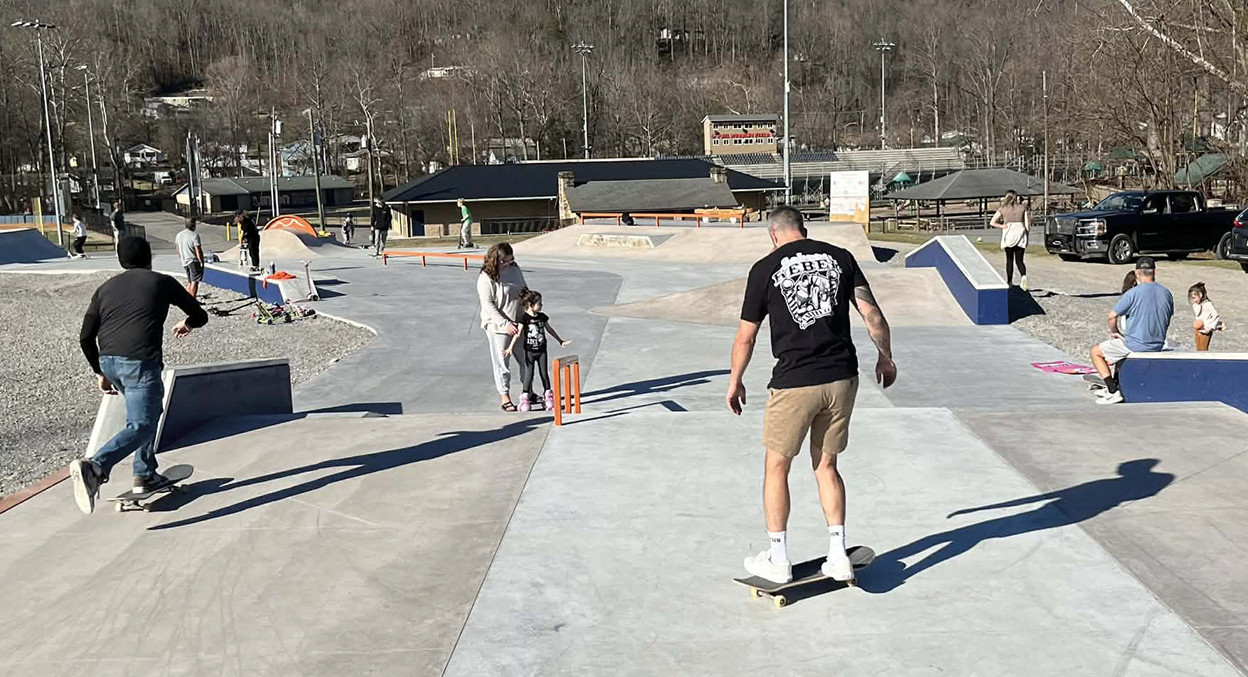
The city recently installed the new Tyler Flanary Skate Park and Pump Track, which features an asphalt pump track designed for competition-level biking, as well as a competition-grade concrete skate park with steel coping rails. The Skate Park, which sees hundreds of visitors on mild days, is a decades-long project started by Tracey and Wayne Jordan, whose son Tyler tragically passed away.
“This skate park and pump track are about so much more than concrete and competition.
It is about giving our kids a safe, positive place to gather, grow, and stay active right here in Big Stone Gap,” Meade told the Business Journal. “It improves quality of life for our residents, while also creating real economic impact by bringing competitive events, families, and visitors into Wise County year-round. This has been a decades-long dream for Tyler’s parents. Tyler loved skating, and a competition-level park would have meant the world to him. Naming it in his memory turns that loss into something lasting and meaningful. It will honor his life, while giving future generations opportunities he would have absolutely loved.”
When it comes to progress on recreation and tourism, Town Manager Stephen Lawson has led significant advancements to the east at Big Cherry Recreation Area and around Big Cherry Lake.
Meade told the Business Journal the town is currently preparing to connect their Greenbelt Walking and Bicycle Trail with the Powell River Trail in nearby Appalachia, Va. This will create a trail system of more than five miles linking the communities and bringing tourism and economic growth to the entire area.
“Big Stone Gap is still doing very well,” Meade explained. “We have over 30 unique places to eat and several new businesses seriously looking at locating here, including a butcher shop, a barbecue restaurant and some entertainment venues that are in the early planning stages. We’re working closely with those investors and feel optimistic about what’s ahead.”
**
About 30 miles east through the rolling hills, St. Paul conveniently sits about halfway between Abingdon and Wise. Perched along the Clinch River, the town of roughly 1,000 offers growing tourism opportunities centered around outdoor adventure, small-town charm and access to one of the most biodiverse river systems in the United States.
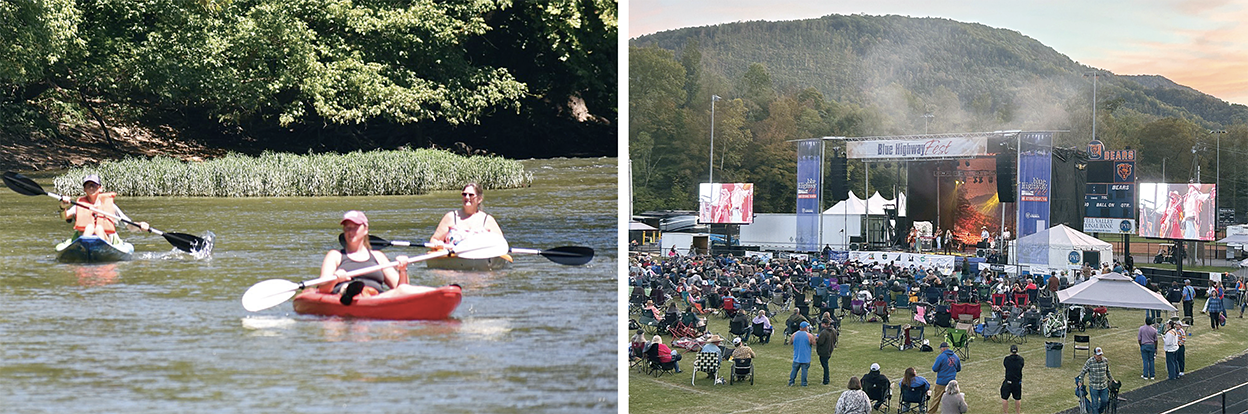
Visitors are drawn to the town as a gateway to the region’s expanding trail and recreation network. With its riverfront location, the town is the centerpiece of Clinch River State Park, a unique “blueway” park designed for river recreation such as kayaking, canoeing, fishing, and wildlife viewing. The river is known for its exceptional biodiversity and scenic mountain landscapes, making it a prime destination for nature-based tourism.
Outdoor recreation is a major driver of visitation. St. Paul serves as a trailhead community for the Mountain View portion of the Spearhead Trails system, providing access to more than 100 miles of ATV and off-road trails that attract riders from across the region. The town also features more than 13 miles of hiking and biking trails, including the Sugar Hill Trail system and riverside paths that showcase the beauty of the Clinch River Valley.
Water recreation adds another layer to the visitor experience. Kayaking and tubing trips along the Clinch River, along with fishing and paddling at Oxbow Lake Park, create accessible outdoor activities for families and adventure travelers alike.
In addition, the 28th annual Clinch River Days Festival will be held May 28-30. The event includes music, crafts, food vendors and special kids’ activities.
“Supporting these attractions are lodging options such as the Western Front Hotel, locally owned restaurants and small businesses that cater to visitors,” Kathy Stewart, Main Street Manager for St. Paul Tomorrow, Inc., told the Business Journal. “Together, these assets position St. Paul as an emerging outdoor tourism hub in Southwest Virginia.”
**
Friends of Southwest Virginia announced March 27 they will partner with Buchanan County, Dickenson County and the Cumberland Plateau Planning District Commission to launch the Gateways to Adventure: Buchanan & Dickenson Counties Outdoor Recreation Development Initiative, a new effort to elevate Southwest Virginia as a premier outdoor recreation destination.
Funded through an Appalachian Regional Commission Area Development award, the initiative will evaluate opportunities across trails, mountain biking, ATV connectivity, climbing and water-based recreation, while strengthening connections between outdoor assets and downtown communities. Planning will include a targeted focus on the Southern Gap area and its connection to Breaks Interstate Park as a key regional gateway.